 Back to Blogs
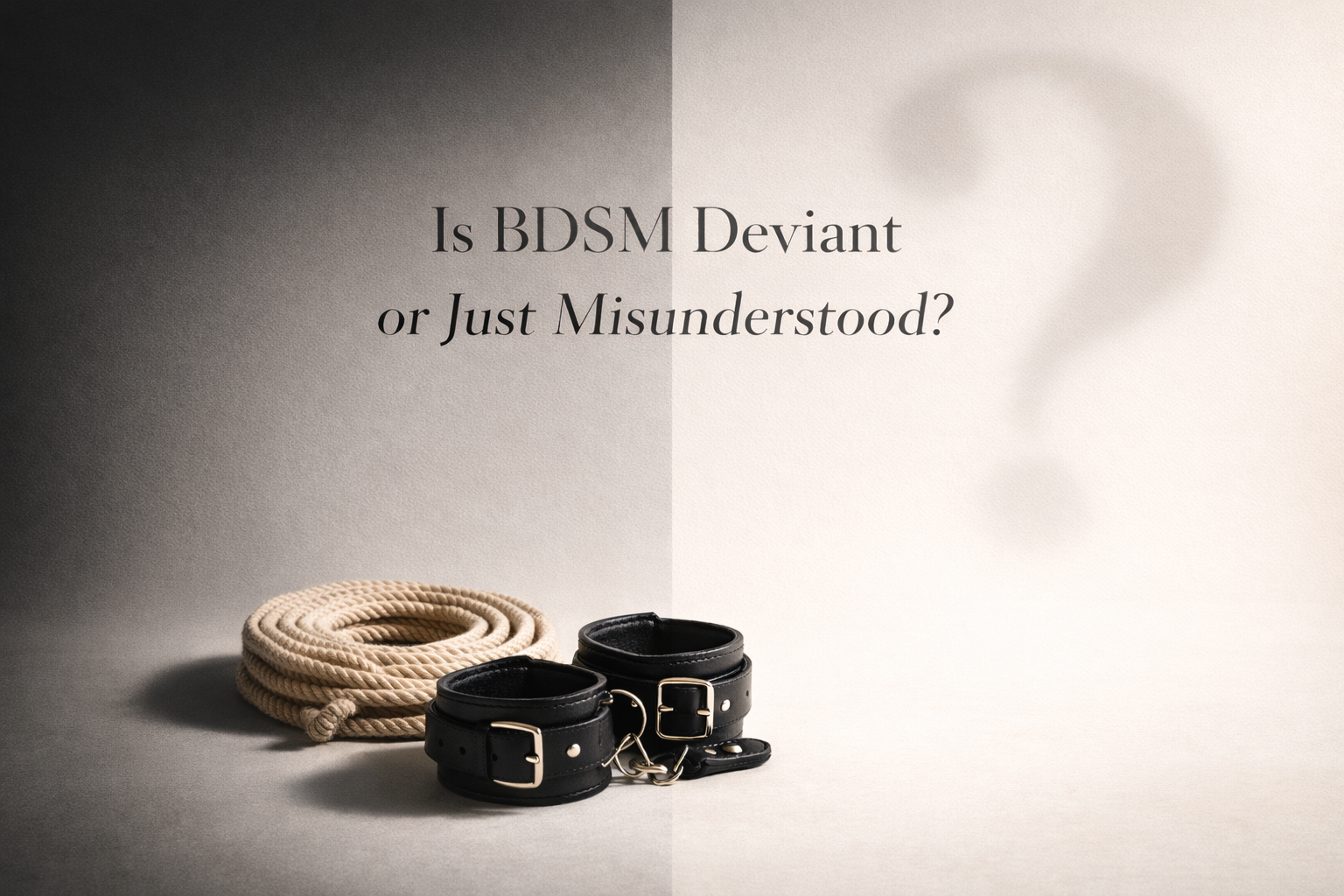
BDSM is often labeled as deviant, extreme, or outside the norm, but in reality it is more accurate to describe it as misunderstood. Much of that perception comes from outdated assumptions and a lack of clear information. As more people openly discuss consent, boundaries, and personal preferences, BDSM is increasingly recognized as a structured and respectful form of exploration rather than something dark or harmful.
If you are new to the topic, it helps to begin with the basics. Our What is BDSM? A Beginner Friendly Guide explains the core meaning of BDSM and why consent, trust, and communication are central to it. Once people understand that foundation, many of the old stereotypes start to fall apart.
One of the biggest myths is that BDSM is abusive. In healthy BDSM, everything is discussed in advance, boundaries are respected, and all participation is consensual. That is a major difference. Abuse ignores consent, while BDSM depends on it. This is one reason many couples find that exploring BDSM actually requires more communication and honesty than many people expect.
Another common misconception is that BDSM is always extreme. In reality, many people explore very light forms of bondage, sensation play, or power exchange. Some may start with a blindfold, simple restraints, or beginner-friendly tools. Others may explore larger items like dungeon furniture that supports positioning, comfort, and control in a more intentional way. The experience can be as mild or as intense as the people involved choose.
For some couples, sensation play becomes an easy introduction because it allows them to experiment without diving into more advanced activities. Tools like floggers are often used in controlled settings where communication and pacing matter just as much as the item itself. Exploring this way can help couples learn what they enjoy while keeping safety and trust at the center of the experience.
BDSM is also more common than many people realize. A lot of people enjoy elements of teasing, restraint, roleplay, or power dynamics without even thinking of it as BDSM. As conversations around intimacy become more open, it is clear that these interests exist across a wide range of relationships and comfort levels.
The word deviant usually says more about cultural judgment than it does about the actual behavior. When adults communicate clearly, agree on boundaries, and choose to explore together, BDSM becomes less about labels and more about personal choice. That is why the conversation around BDSM has changed so much in recent years. People are starting to separate consensual kink from myths, shame, and misunderstanding.
It is also important to remember that BDSM is not one-size-fits-all. Some people enjoy the physical side, others prefer the emotional or psychological side, and many mix the two. There is no rule that says someone has to enjoy every part of it. Exploration should always happen at a pace that feels safe, informed, and comfortable.
In the end, BDSM is not defined by fear-based labels. It is defined by the people involved, the boundaries they set, and the respect they show each other. When seen through that lens, BDSM is not simply deviant. More often, it is just misunderstood.
|